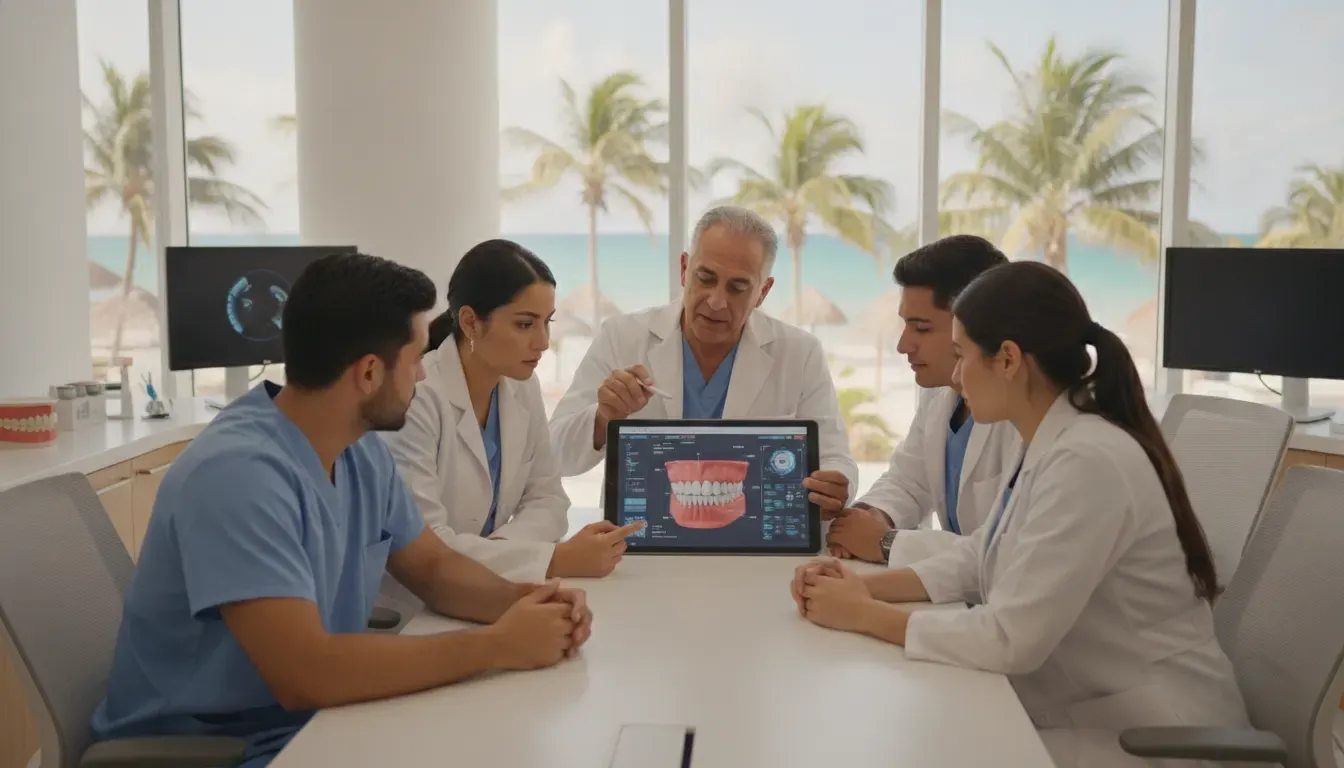
For dentists who want to move beyond lecture-based continuing education, the International Implant Institute’s Cancun training experience offers a different kind of professional growth. It brings advanced implant education into a real clinical setting where diagnosis, planning, surgical judgment, and mentorship come together.
A recent San Francisco Post feature on the International Implant Institute’s Cancun experience highlighted the program’s focus on hands-on training, live patient procedures, CBCT interpretation, and direct mentorship from Dr. Julia L. Jackson. The article captures what many clinicians are looking for: a bridge between knowing implant concepts and applying them with confidence in real cases.
A Clinical Experience Built Around Real-World Application
Traditional continuing education can be valuable, but it often leaves a gap between classroom understanding and clinical execution. Dentists may understand the principles of treatment planning, implant placement, grafting, and restorative sequencing, yet still feel uncertain when those decisions must be made with a patient in the chair.
The Cancun experience is designed to close that gap. Participants are exposed to real clinical workflows, from diagnostic review and case planning to surgical decision-making and patient-centered execution. The setting allows dentists to connect the technical details of implant dentistry with the practical judgment required in daily practice.
This focus aligns with the Institute’s broader educational philosophy: implant training should help clinicians build usable confidence, not simply collect CE hours. The most meaningful learning happens when dentists can ask questions, observe experienced decision-making, and understand why each step matters.
Why CBCT Planning Matters in Advanced Implant Training
One of the major themes in the San Francisco Post article is the importance of CBCT interpretation and comprehensive treatment planning. Many dentists have access to advanced imaging, but the value of that technology depends on the clinician’s ability to read scans carefully and translate findings into a safe, predictable plan.
In an advanced training environment, CBCT review is not just about identifying implant sites. It involves assessing bone volume, anatomic limitations, nerve proximity, sinus considerations, pathology, restorative requirements, and potential complications before surgery begins. These details shape case selection and improve the clinician’s ability to anticipate challenges.
For dentists seeking deeper planning skills, the Institute’s related guide to CBCT treatment planning for dental implants shows how diagnostic thinking supports better implant outcomes. Cancun adds another layer by placing that planning mindset into a supervised, real-world clinical environment.
Live Patient Implant Training Changes the Learning Curve
Simulation, models, and lecture-based instruction all have a place in implant education. They help clinicians understand anatomy, instrumentation, workflow, and technique. But live patient training introduces a level of clinical complexity that cannot be fully replicated in a classroom.
During live patient experiences, participants must think through soft tissue conditions, surgical access, patient factors, procedural efficiency, and restorative goals. They also see how mentors respond when a case requires adjustment. That exposure helps dentists develop the judgment needed for safer, more confident implant care.
The Institute has explored this same principle in its article on live patient implant training and mentorship. The Cancun experience reinforces that idea by combining direct clinical exposure with structured guidance, so dentists are not simply watching procedures from a distance.
Ask About Upcoming Training Opportunities
Mentorship Is the Difference Between Exposure and Growth
Hands-on experience is most valuable when it is paired with thoughtful mentorship. The Cancun program is not positioned as a passive observation trip. It is structured around close interaction, clinical discussion, and the ability to learn directly from experienced implant professionals.
That matters because implant dentistry requires more than technical repetition. Clinicians need to understand how to evaluate cases, manage risk, communicate clearly, and sequence treatment in a way that serves the patient. Mentorship helps dentists process what they are seeing and connect individual procedures to larger clinical principles.
For dentists who are trying to accelerate their development, this type of guidance can shorten the learning curve. Instead of relying only on trial and error, participants benefit from real-time feedback and a community of peers who are pursuing similar clinical goals.
Why the Cancun Setting Supports Focused Learning
The destination setting is also part of the experience. Cancun creates a dedicated environment where participants can step away from the daily demands of practice and concentrate on clinical growth. That separation can make it easier to absorb new concepts, ask better questions, and engage fully with the material.
At the same time, the program is not simply about location. The value comes from the combination of environment, mentorship, case exposure, and structured clinical education. The result is a professional learning experience that feels intensive, collaborative, and directly connected to the realities of implant practice.
Dentists considering international hands-on training can also review the Institute’s guide on how to choose a live surgery implant course abroad to better understand what to look for in a safe and meaningful program.
A Stronger Path From Knowledge to Confidence
The San Francisco Post feature reflects a larger truth about advanced implant education: dentists often need more than information. They need context, mentorship, repetition, and supervised exposure to real clinical decision-making.
The International Implant Institute’s Cancun experience is designed for that kind of transformation. By combining CBCT planning, live patient procedures, advanced clinical discussion, and mentorship from Dr. Julia L. Jackson and the Institute’s team, the program gives dentists a practical pathway toward greater confidence in implant dentistry.
For clinicians who are ready to take the next step, the Cancun experience shows how continuing education can move beyond the conference room and into the kind of immersive training that changes how dentists think, plan, and practice.