
ADA CERP and AGD PACE Approved Provider.
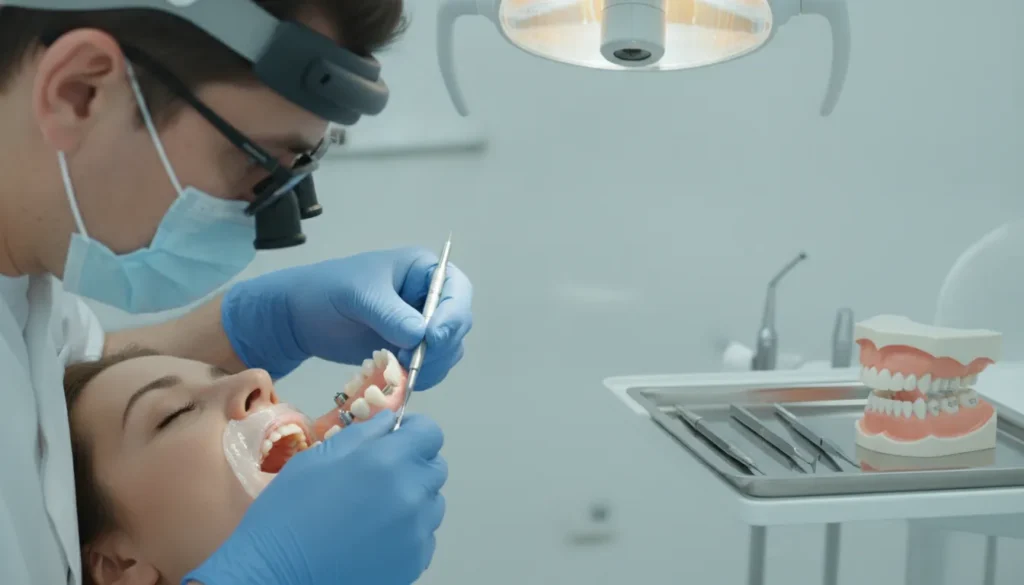
When a patient can no longer keep a conventional denture stable, the next step is not simply choosing between more adhesive and a fixed full-arch case. An implant-retained overdenture can offer a practical, removable path to greater retention while keeping the treatment workflow within a general practice’s broader restorative capabilities.
An implant overdenture guide dentists can use should connect patient selection, prosthetically driven planning, implant placement, attachment design, delivery, and maintenance. Most cases use two to four implants to secure a removable prosthesis, which the patient can remove and replace for daily care. The right indication depends on anatomy, health, expectations, hygiene ability, and the clinician’s training and support structure.
For general dentists, the opportunity is both clinical and practical: understand where overdentures fit among conventional and fixed options. Establish a repeatable workflow, and know when collaboration is appropriate. That foundation begins with the design itself and how it functions in the patient’s mouth.
Ready to begin offering implant overdentures in your practice? Explore hands-on training options at International Implant Institute.
An implant overdenture is a removable denture that attaches to dental implants placed in the jaw. It combines the stability of implant support with the convenience of a prosthesis the patient can remove for cleaning and maintenance.
Most implant overdentures use two to four dental implants to secure the prosthetic teeth. The implants support attachments that connect with corresponding components inside the denture. In many cases, this is a snap-on mechanism. Patients can remove and replace the prosthesis themselves, provided they receive clear instruction on handling and hygiene. ClearChoice describes the typical implant range and snap-on function in its procedure guide.
A fixed implant bridge is secured to implants and is not designed for the patient to remove. An implant overdenture, by contrast, is removable even though it gains retention from implants. That distinction affects the prosthesis design, the maintenance conversation, and the patient’s daily responsibilities. Treatment planning should account for the final restoration and position implants so they accommodate that restoration, rather than treating implant placement as an isolated surgical step.
For dentists explaining the options, the simplest comparison is this: a fixed bridge stays in place and is maintained clinically. While an overdenture snaps on and off for patient-performed cleaning. Neither description alone determines candidacy. The appropriate choice depends on anatomy, restorative goals, hygiene capacity, expectations, and the broader treatment plan.
A conventional denture rests on the soft tissues and does not attach to implants. It may move during speaking or chewing, particularly when the supporting ridge and prosthesis provide limited stability. An implant overdenture remains removable, but implant retention can provide a more stable alternative for patients who struggle with conventional denture limitations. Patient reports commonly describe meaningful improvements in everyday comfort and function when stability improves.
Implant overdentures are therefore one of the most practical advances in restorative dentistry: they offer a removable solution without relying solely on soft-tissue support. When you want a deeper clinical and training-focused review, see the implant overdentures training resource. Use that definition with patients, then move into individualized evaluation and prosthetically driven planning.
Strong case selection begins with more than a desire for improved denture retention. Evaluate the patient’s anatomy, medical status, restorative goals, existing prosthesis, and ability to participate in treatment and maintenance. A patient-centered, evidence-based approach helps you select an implant overdenture design that is clinically appropriate and realistic for the individual.
Start with a complete diagnostic workup. Review the available bone volume and density, ridge anatomy, soft-tissue conditions, interarch relationship, and the proposed path of insertion. Bone quality and quantity influence implant positioning, the number of implants considered, and whether staged treatment or site development may be necessary. The treatment plan should also account for implant timing and loading protocols. These are among the key considerations identified in current clinical guidance for edentulous care (global consensus guidance on implant placement and loading).
Systemic health does not automatically exclude a patient, but uncontrolled conditions, active infection, poor healing capacity, or medication-related concerns may require medical coordination and risk management before surgery. Discuss smoking, glycemic control, periodontal history, medications, and prior surgical complications. Document the patient’s ability to attend follow-up visits and maintain daily hygiene around the attachments.
The current denture provides useful information. Ask where it loses retention, whether the patient can tolerate its extension, and how well its teeth, borders, occlusion, and vertical dimension support function. A worn or unstable denture may need to be corrected or replaced before it becomes the basis for an overdenture. Confirm that there is adequate restorative space for the attachment components, denture base, teeth, and cleansable contours without compromising phonetics or facial support.
Patient motivation is equally important. Implant overdentures can offer a removable yet more stable alternative for people struggling with conventional denture limitations. But the patient must understand that implants do not eliminate maintenance or the need for professional reviews. Set expectations around hygiene, insertion and removal, adaptation, repairs, and possible future relining.
Use both patient-reported and clinician-reported outcomes when defining success, rather than judging the case by implant placement alone. This broader framework is consistent with evidence-based recommendations for edentulous maxillary rehabilitation (clinical guidelines for edentulous maxilla rehabilitation). For a foundation in implant diagnosis and terminology, review what is a dental implant before moving into the surgical and prosthetic workflow.
A predictable overdenture workflow is prosthetically driven from the first consultation through recall. Treatment planning should account for implant number, placement timing, and loading protocols, while every clinical and laboratory step preserves the fit and function of the final restoration.
The clinical case for implant overdentures is improved stability and function; the business case is a service line that can help a general practice retain appropriate cases. Compare the full treatment pathway, maintenance obligations, and patient outcomes rather than viewing the initial fee in isolation.
| Factor | Implant overdentures | Conventional dentures |
|---|---|---|
| Retention and stability | Implants anchor a removable prosthesis, reducing movement during speaking and eating. | Retention depends primarily on anatomy, fit, adhesives, and ongoing ridge changes. |
| Bone preservation | Implant placement may help maintain functional loading in selected areas, but case planning and patient factors determine the result. | Does not provide implant-supported loading, so progressive ridge resorption can complicate fit over time. |
| Chewing and speech | Greater prosthetic stability can support more confident chewing and speech. | Movement may limit food choices or clarity for some patients. |
| Patient satisfaction | Evidence reports significantly higher satisfaction for implant-retained options than conventional dentures, particularly when instability is a chief complaint. | Can remain appropriate when anatomy, health, preference, or finances make implants unsuitable. |
| Cost and maintenance | Higher initial cost, with surgical, restorative, and maintenance components. Patients need hygiene instruction, recall, and replacement of worn attachments or prosthetic parts when indicated. | Lower initial cost, but relines, adjustments, repairs, and replacement may be needed as fit changes. |
| Longevity | Implants and prostheses have different service lives. Long-term success depends on hygiene, occlusion, recall, and component care. | Longevity depends on wear, fracture risk, material condition, and changes in the supporting tissues. |
For a dentist, the right recommendation is not automatically the more expensive one. Start with the patient’s anatomy, systemic health, expectations, dexterity, and ability to attend maintenance visits. Then discuss the financial tradeoff transparently:
Education should cover both technique and implementation. The Institute integrates the business of implant dentistry with clinical decision-making, helping dentists evaluate scheduling, case acceptance, team roles, and follow-up systems. For patients who need a different full-arch pathway, review All-on-4 and All-on-6 implant restoration. When anatomy requires additional preparation, clinicians may also need to evaluate bone grafting techniques.
Integrating overdenture care requires more than adding implant components to a treatment menu. General dentists need a practical training pathway, the right clinical resources, a defined case-selection process, and a business model that supports consistent patient care.
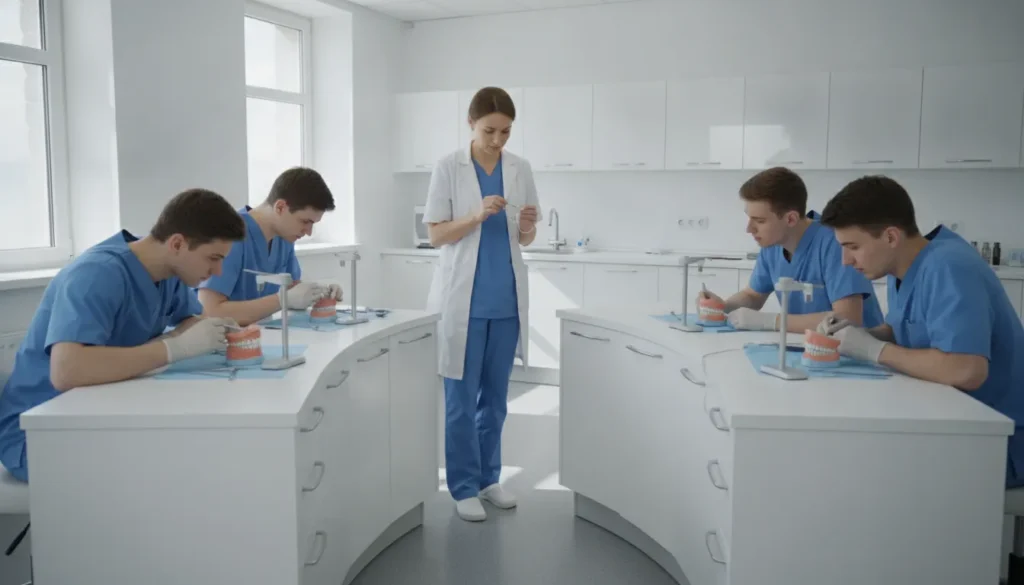
Start with education that connects basic restorative principles to surgical and prosthetic implant skills. Implant-retained overdentures are a critical part of full-arch training, and the most useful programs allow dentists to apply concepts rather than only listen to lectures. Look for implant mini residency with hands-on training that includes models, treatment planning, and supervised clinical decision-making.
Hands-on models and live surgery provide context that lecture-heavy courses cannot replicate. They help you understand how implant placement, attachments, impressions, occlusion, and maintenance connect across the full treatment sequence. A live patient implant course can also help bridge the gap between foundational restorative care and more advanced implant practice. Prioritize programs that offer ADA CERP or AGD PACE accreditation when continuing education documentation and career advancement matter to your practice.
Early implementation should be deliberate. Many practices begin with straightforward mandibular cases supported by two implants, then expand as the dentist and team gain experience. Confirm that your office can support the required surgical and restorative workflow, including:
Use prosthetically driven planning so implant positions serve the intended final restoration. For advanced anatomy, extensive grafting, complex maxillary cases, or treatment outside your current competency, establish referral relationships with experienced surgeons, prosthodontists, and laboratories. A strong referral network protects patients while giving your practice a clear path to grow responsibly.
Patient education should explain stability, removability, hygiene, expected appointments, maintenance, and alternatives in plain language. Training in the business of implant dentistry can help your team present treatment ethically, coordinate financing conversations, and build a predictable consultation process. Track case acceptance, referral volume, treatment time, remake rates, maintenance visits, and profitability. This balances clinical technique with sound business practices while helping you determine whether the service is meeting patient and practice needs.
Hands-on training can help you build the clinical confidence and workflow needed to evaluate and deliver implant-retained overdenture cases.
Take the next step toward offering this service by calling +1-215-906-5052. Call International Implant Institute today to discuss hands-on training options.
Start with the intended prosthesis, the patient’s anatomy, medical history, expectations, hygiene capacity, and ability to attend follow-up visits. Confirm that the patient understands the restoration will be removable and that implant positions must support the final prosthetic design. A prosthetically driven assessment helps identify cases that require referral or interdisciplinary planning.
Design the anticipated overdenture before selecting implant positions. Diagnostic records, three-dimensional imaging when indicated, and a clear restorative plan help the team coordinate implant number, distribution, timing, and loading protocol. This sequence keeps surgery aligned with the functional and maintenance requirements of the finished restoration.
An implant overdenture remains removable for daily cleaning, but attachments connect it to implants for greater retention than a conventional denture can provide. The comparison should include surgical treatment, maintenance, tissue and bone considerations, appointment demands, and long-term patient priorities rather than focusing only on the initial fee.
Begin with structured education that connects diagnosis, surgical planning, restorative execution, occlusion, complications, and practice systems. Lecture knowledge should be reinforced with hands-on models and supervised clinical experience. A standardized case-selection process and a referral pathway are also important while the dentist builds confidence with increasingly complex cases.
Compare the formats side by side, or talk to our team about where to start.